Integrating Biomimicry in TreeNests
TreeNests (sometimes called log hives) represent a novel approach for integrating natural honeybee nest site parameters into system-based conservation programs (see LocApiary). A TreeNest is not designed to be used for beekeeping.Their design incorporates principles of biomimicry, ethics, and the instinctual preferences of bees. Serving as an innovative tool, TreeNests (log hives) aid in the restoration of wild, apian nesting sites. Recent entomological studies and the research by Apis Arborea (AA) underscore the remarkable resilience and robust health observed in wild honeybee populations. AA attempts to leverage this research by integrating it into system-based conservation strategies that empower the resilience of local bioregions. This approach offers a novel pathway for local communities to collaborate with non-human constituencies in creating regenerative systems.
Remediation with TreeNests
We install TreeNests (log hives) as part of our Wilding programs and offer training for design and construction. TreeNests are essential for restoring apian health in diverse landscapes, including farms, parks, backyards, and also for mitigation programs for wildfire-damaged ecosystems, or watersheds impacted by logging. Check out our events calendar for upcoming workshops.
How to order a TreeNest
Each TreeNest is crafted uniquely in-house by Apis Arborea. You can pick it up from our shop or have it shipped within the US. To place an order, please send an email to info@apisarborea.org. The price for a TreeNest is currently $749.00.
Frequently Asked Questions
What is a TreeNest?
A TreeNest—sometimes referred to as a “log hive”—is a purpose-built honey bee habitat inspired by natural nest sites found in trees. Each TreeNest incorporates biomimicry and provides for the instinctual preferences of wild honey bees to foster their health and resilience across diverse environments.
How are TreeNests different from log hives?
While TreeNests may resemble log hives, they are specifically designed to more closely replicate the conditions of wild honey bee nests. Unlike traditional log hives, TreeNests are not intended for beekeeping or honey harvesting—they exist solely to benefit wild honey bees and their habitats.
Are TreeNests used for beekeeping?
No. TreeNests are not designed for beekeeping or honey harvesting. They hold fixed, natural comb built by the bees and have no movable frames, so they cannot be opened and managed the way a conventional hive is. A TreeNest serves wild, free-living honey bees and their habitat alone.
What are the benefits of using a TreeNest?
TreeNests help restore networks of wild honeybee populations and promote pollinator health in farms, parks, backyards, and even in landscapes recovering from wildfire or logging. By supporting wild honeybees, TreeNests contribute to regenerative systems and foster meaningful collaboration between people and pollinators.
How can I order a TreeNest?
Every TreeNest is handcrafted by Apis Arborea. You can pick up your TreeNest at our shop or have it shipped anywhere in the United States. To order, please feel free to email us.
Do you offer training or workshops on TreeNests?
Yes. Apis Arborea offers training and workshops on TreeNest design and construction as part of our Wilding programs. Please see our events calendar for upcoming opportunities to participate.
Can I build my own TreeNest?
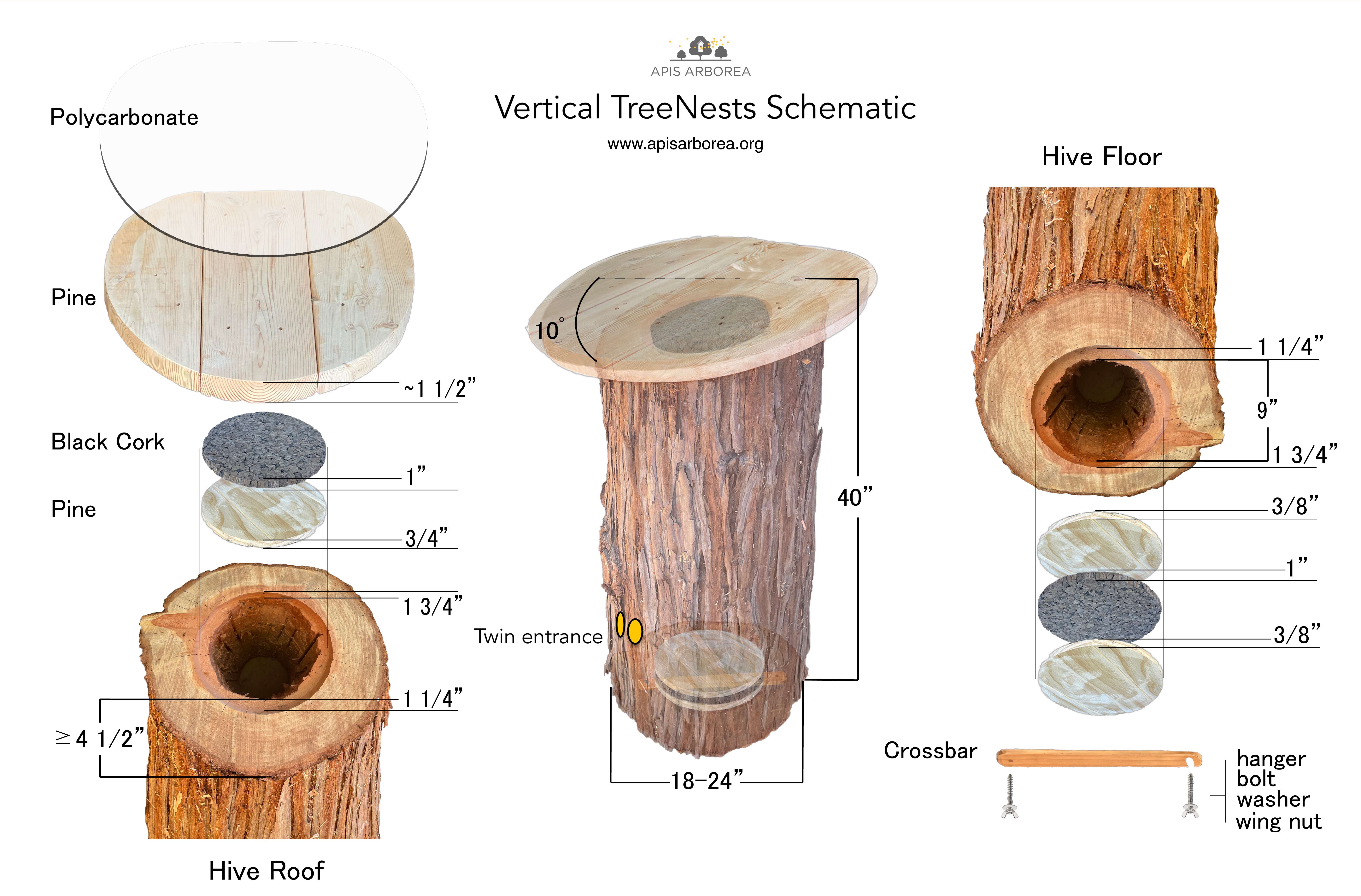
We provide open-source resources and schematics for our vertical log hive design, which you can use as a guide to build your own TreeNest and support wild bee populations (also see the schematic below).
Where can TreeNests be installed?
TreeNests are adaptable and can be installed in a range of environments, including farms, parks, private gardens, and diverse natural areas.
.
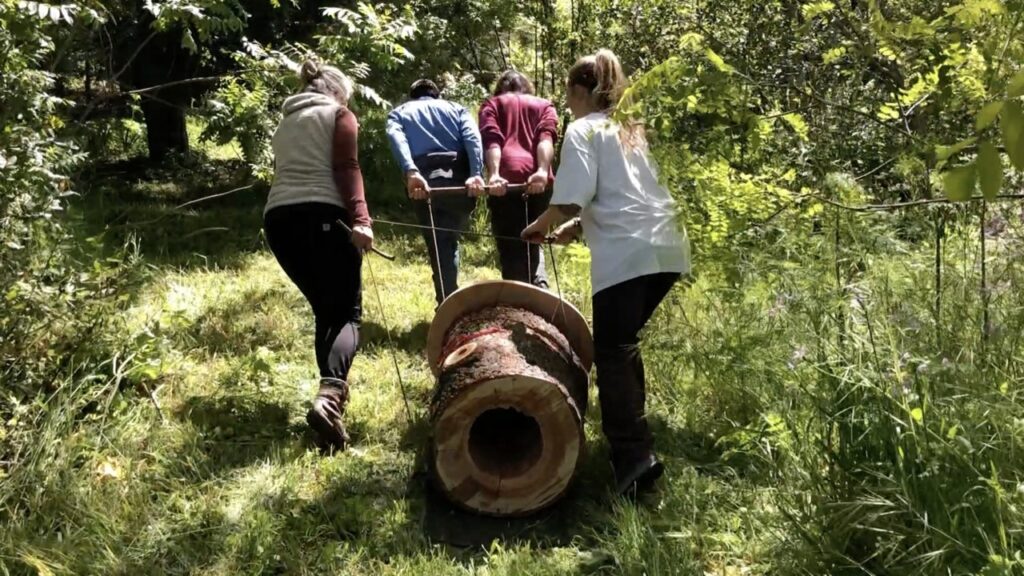
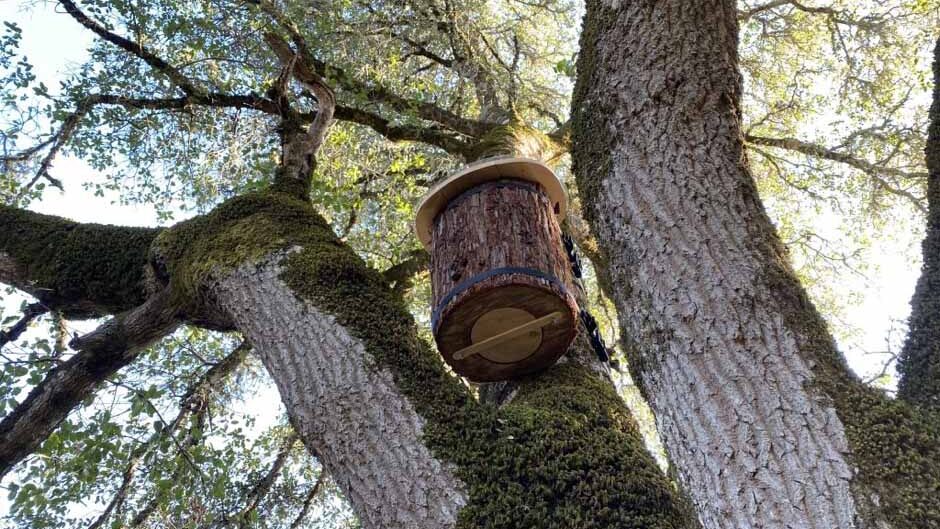
The schematic below shows our most current vertical log hive design. It is available as an open resource and reference for anyone interested in wilding bees and building TreeNests.